

Gustav Holst
Biography, works and influence.
Gustav Holst (1874–1934) was a British composer of the late 19th and early 20th century. He wrote across a wide range of musical styles and forms, but is best known for his famous orchestral work, The Planets.
Who was Holst?
Early Life
Gustavus Theodore von Holst (he later dropped the ‘von’) was born and brought up in Cheltenham. His mother, Clara, was British and his musician father, Adolph, was of Swedish, Latvian and German heritage. The young Gustavus was prone to illness, particularly asthma, and his father encouraged him to take up the trombone to help alleviate his symptoms. After attending Cheltenham Grammar School he took counterpoint classes at Oxford, then entered the Royal College of Music in 1893, initially without a scholarship. He continued to study trombone, and also took composition classes with Stanford. To earn money to support himself, he played in London theatre bands, and in various seaside resorts.
A Professional and Spiritual Life
After leaving the Royal College of Music in 1898, Holst continued to work as a professional musician and got engaged to choral singer Isobel Harrison, whom he married in 1901. He became frustrated by the lack of time for composition and by his low income. In 1905, he began his teaching career, taking up the post of Director of Music at St Paul’s Girls School, and later at Morley College. His daughter, born in 1907, was the future composer Imogen Holst. During this period Holst developed a keen interest in folk music, as did many of his colleagues. Less conventional was his fascination with Hinduism; he taught himself Sanskrit and set various translated texts to music, such as his opera Sāvitri, and the cantata The Cloud Messenger. Holst often struggled to secure public performances of his pieces, with some works premiering several years after completion.
Cosmic Levels of Fame
Holst moved his family to Thaxted in Essex in 1913 while continuing to make use of a soundproofed ‘composing room’ at St Paul’s. Around the same time he became more interested in astrology, often preparing charts for family and friends. While he called it his ‘pet vice’, his immersion in the subject fed into his most famous work, The Planets, which is based on astrological rather than astronomical principles. It is a highly individual work, scored for vast orchestral forces, and was written between 1914–16. After its 1920 premiere it was an instant hit in the UK and abroad, with American orchestras competing for its first US performance. As an introverted character, Holst found the sudden fame disconcerting, but he was pleased by the increased interest in his back catalogue.
Final Years
After the Planets era, Holst was exhausted and often in poor health. He nonetheless carried on composing in his usual eclectic vein, with works inspired by folk music, the natural landscape, and even jazz following visits to the US. He continued to teach at St Paul’s, remaining Director of Music until the end of his life, and was honoured with a festival of his music in Cheltenham in 1927. He became very frail in the early 1930s, and died of heart failure during surgery in May 1934.
Gustav Holst
Born: 21 September 1874, Cheltenham, UK
Died: 25 May 1934, London, UK
Contemporaries: Ralph Vaughan Williams, Edward Elgar, Maurice Ravel, Igor Stravinsky, Frank Bridge, John Ireland
Best known for: The Planets, Sāvitri, The Perfect Fool, Nunc Dimittis, Egdon Heath, Hymns from the Rig Veda, In the bleak midwinter
The one piece you have to hear: The Planets
Connection to the LSO: The LSO performed at the first public performance of The Planets in 1920, conducted by Albert Coates.
Watch
Holst’s music performed by the London Symphony Orchestra.
Who inspired Holst?
Holst had a broadminded and scholarly temperament, and absorbed a wide range of musical and extra-musical influences: his daughter Imogen wrote of him that ‘he hated conventionality, and rejoiced in ideas that were fantastic’. In terms of music, Wagner loomed large when he was starting out, hovering over such works as the Symphony in F major, especially its slow movement. The latter was itself a tribute to the artist and socialist William Morris, who Holst also greatly admired. Even some of his early Sanskrit settings are ‘Wagnerian’ in scale and sound, such as opera Sita and the The Cloud Messenger. Schoenberg was another important figure: along with its astrological foundations, The Planets was a direct homage to Schoenberg’s Five Pieces for Orchestra.
The opera Sāvitri, also from Sanskrit, marked a turning point, with a dramatic reduction in forces and a pared-back, very distinctive musical style. The poetry of Thomas Hardy was yet another influence, leading to song settings and the orchestral piece Egdon Heath, based on a fictional place in Hardy’s novels.
Along with his friend Ralph Vaughan Williams, Holst was drawn to the English folk song revival, which inspired several works including A Somerset Rhapsody and Six Choral Folksongs.
In Depth

Five reasons to love Holst's The Planets
Gustav Holst’s The Planets is an iconic British work written on a cosmic scale. Discover more about the charm of a piece that still surprises listeners today.

The Planets: Educational Resources
Introducing KS2 students to Gustav Holst’s The Planets orchestral suite, with free classroom resources including video activity, lesson plans and a quiz.
What are Holst’s most famous pieces?
Orchestral Works
The Planets is so well-known that it can be dismissed as hackneyed or clichéd, but it is a truly original piece with each movement – or ‘planet’ – characterised by a different and intriguing sound world. His other purely orchestral works are generally smaller in scale, such as Beni Mora, inspired by a trip to Algeria, and the later, somewhat enigmatic Egdon Heath.
As a lifelong educator, Holst was also keen to write for non-professional ensembles. His St Paul’s Suite was written for the girls at his school, while A Moorside Suite was composed for a National Brass Band competition in 1928.
Opera and Choral
Holst’s operas are mostly small-scale and typically broad-ranging in subject-matter. The Perfect Fool is a satire on Wagnerian subject-matter; its lively Overture is sometimes performed as a standalone orchestral work. At The Boar’s Head is adapted from Shakespeare.
While Holst composed some songs, he was drawn more to choral music – even including a wordless female chorus at the end of The Planets. His music for choir includes a setting of the ‘Nunc Dimittis’, which is a great favourite with singers, and ‘The Hymn of Jesus’. Among his Sanskrit-texted compositions are the characterful Hymns of the ‘Rig Veda’.
With the LSO
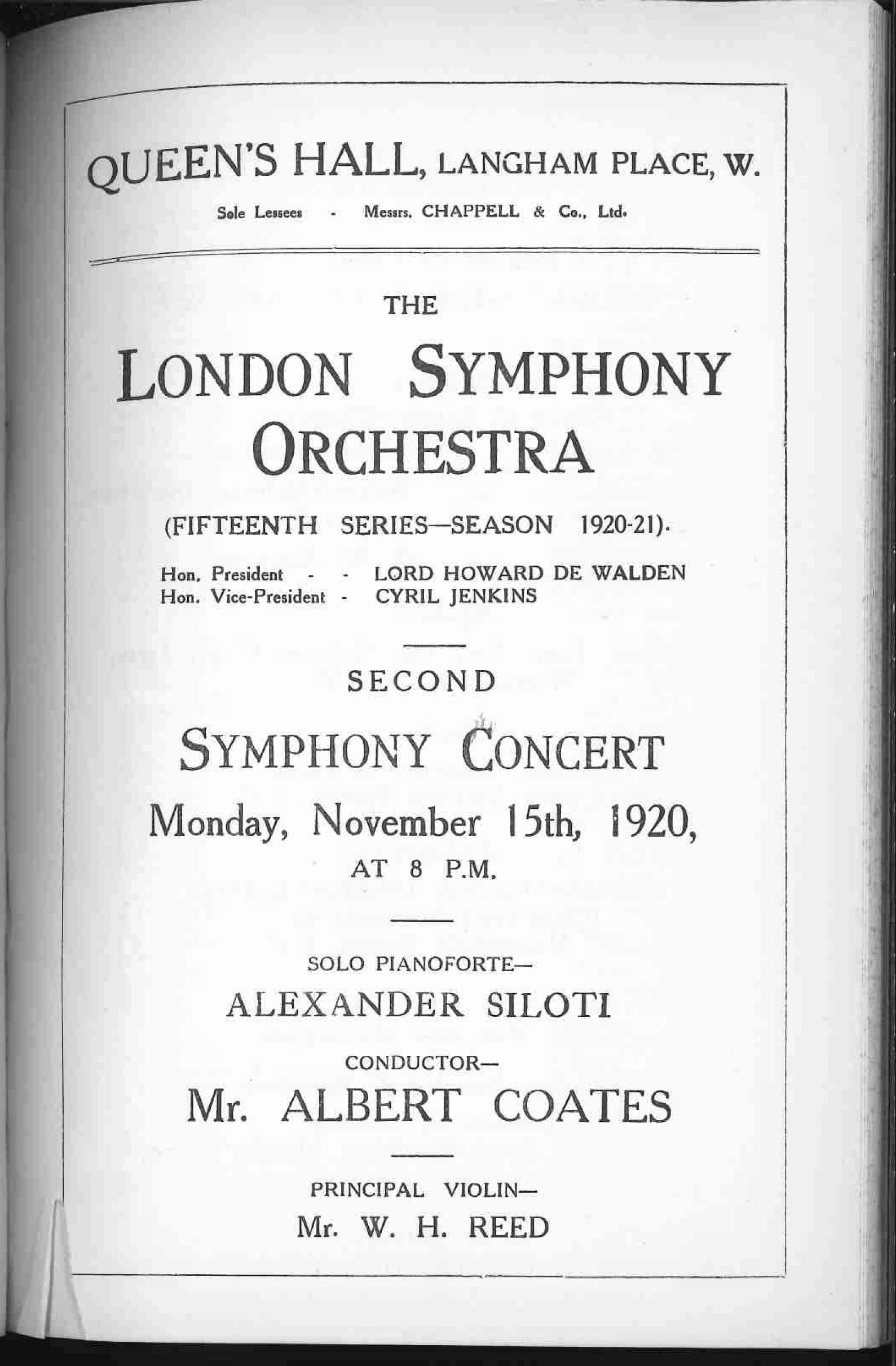
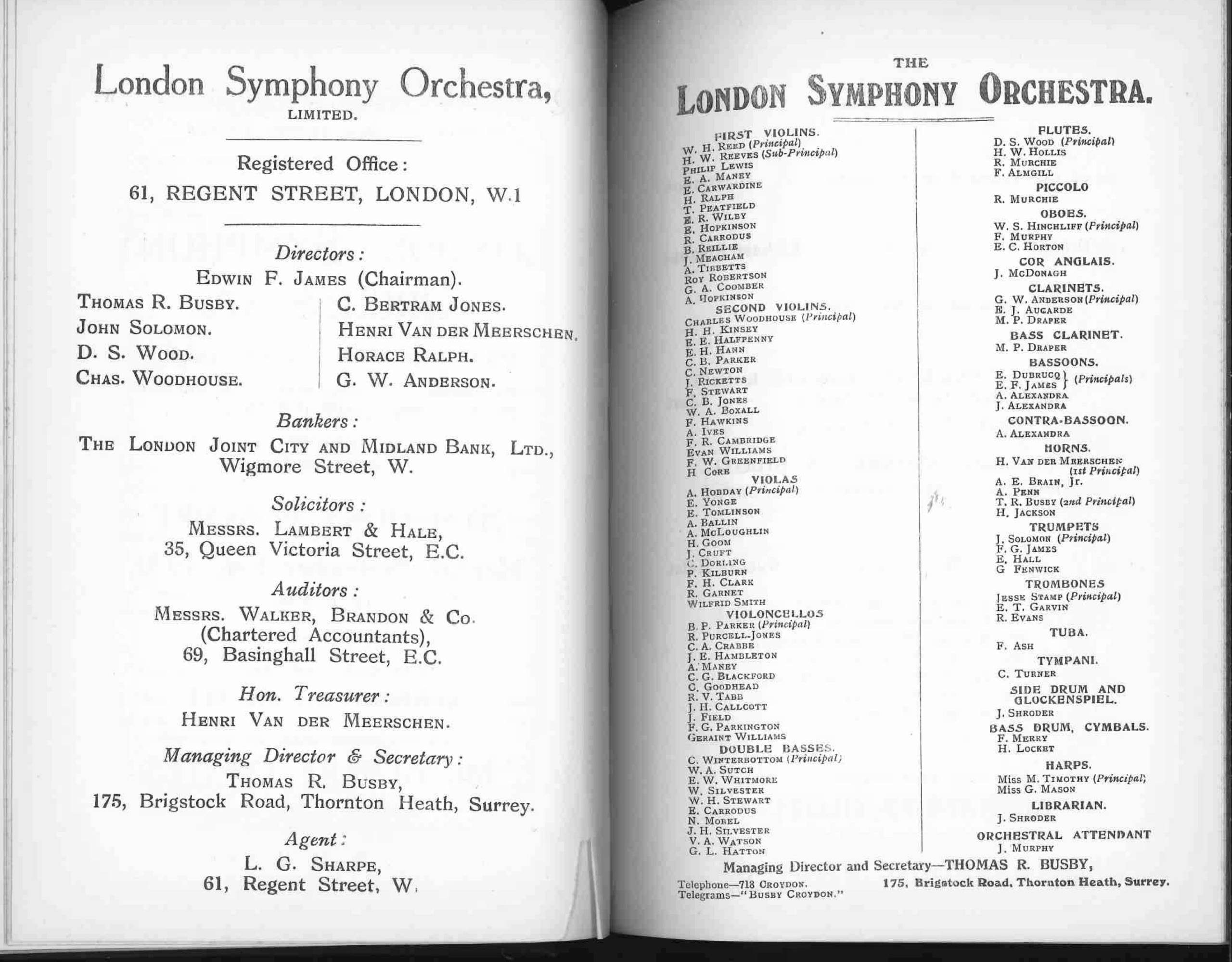
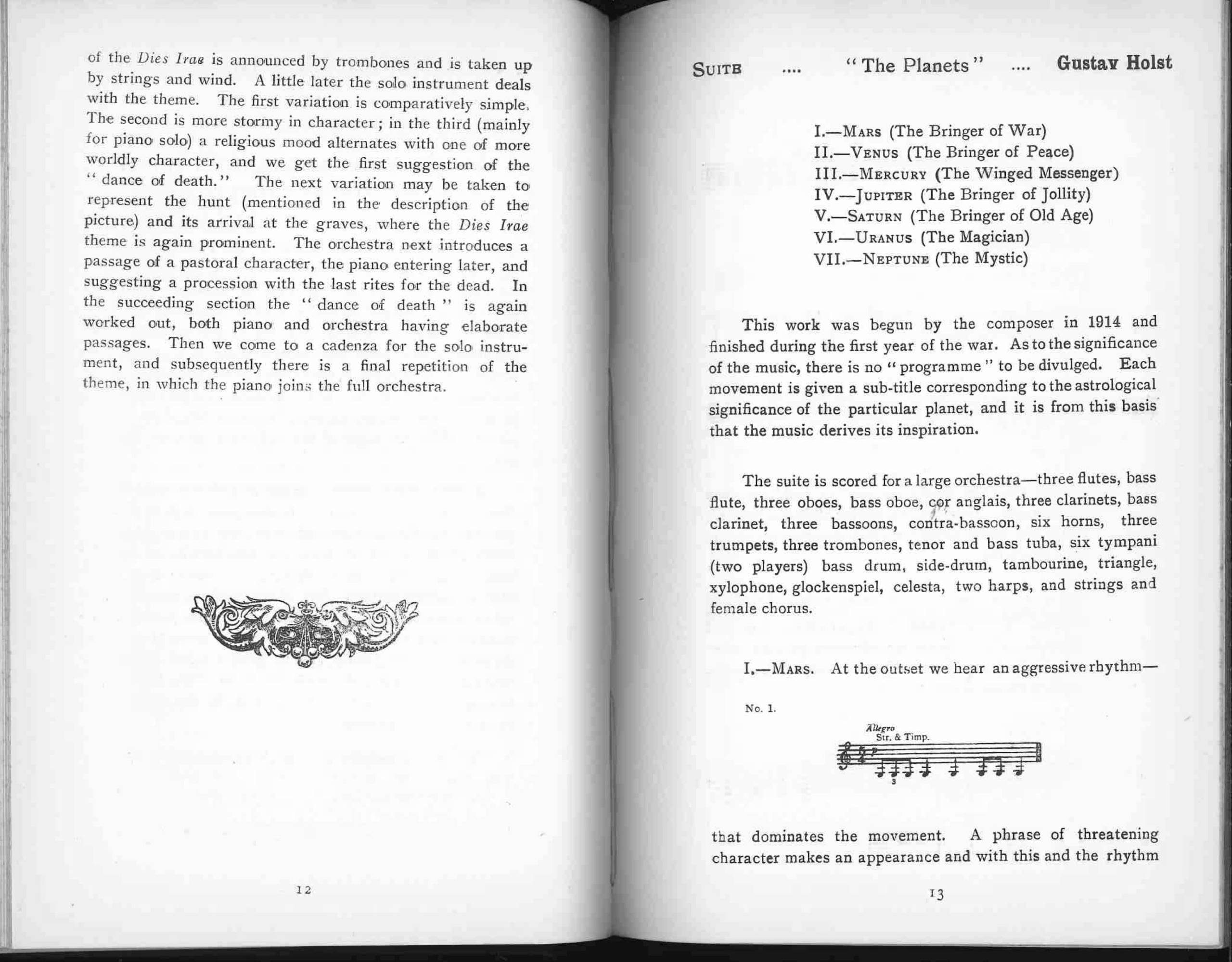
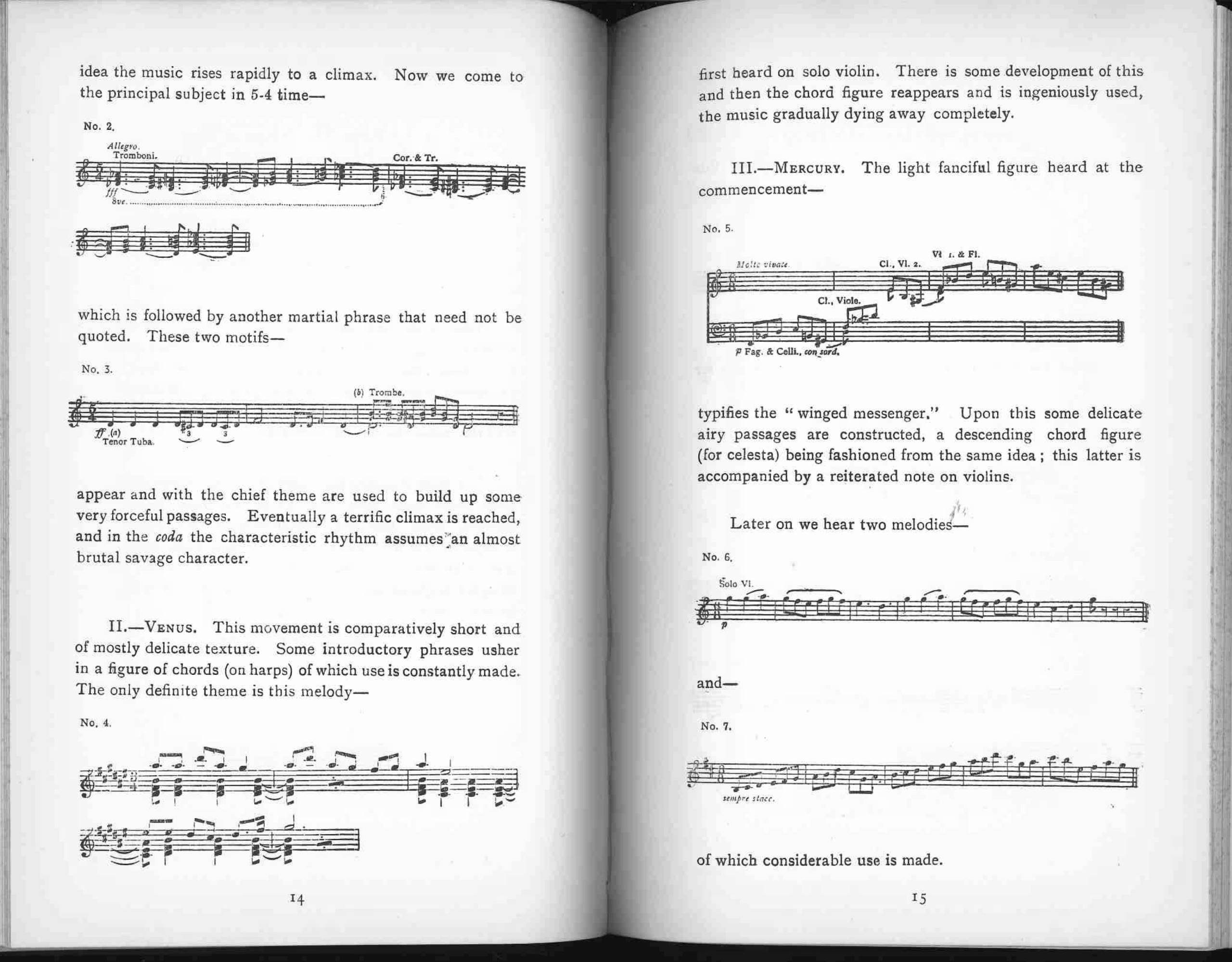
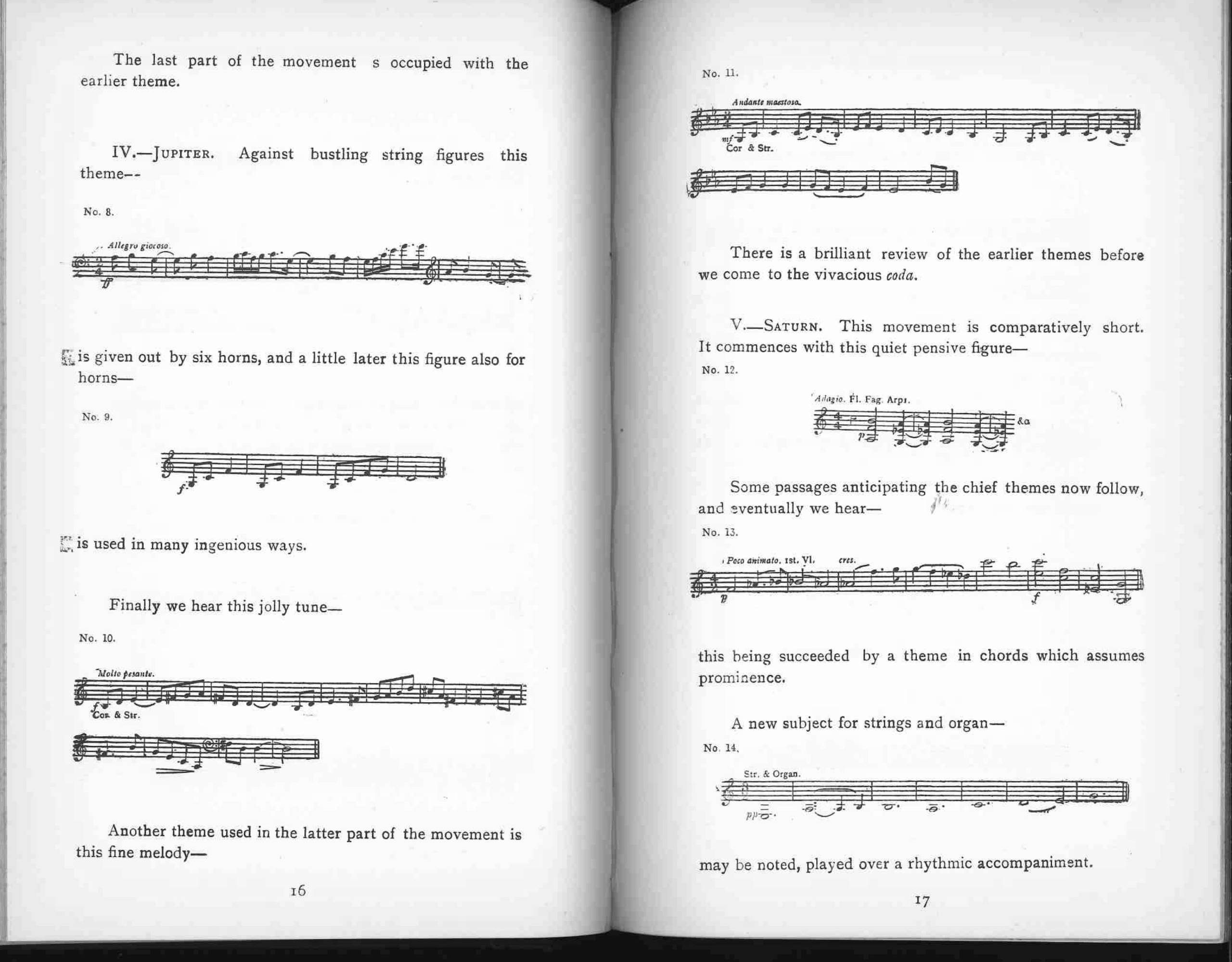
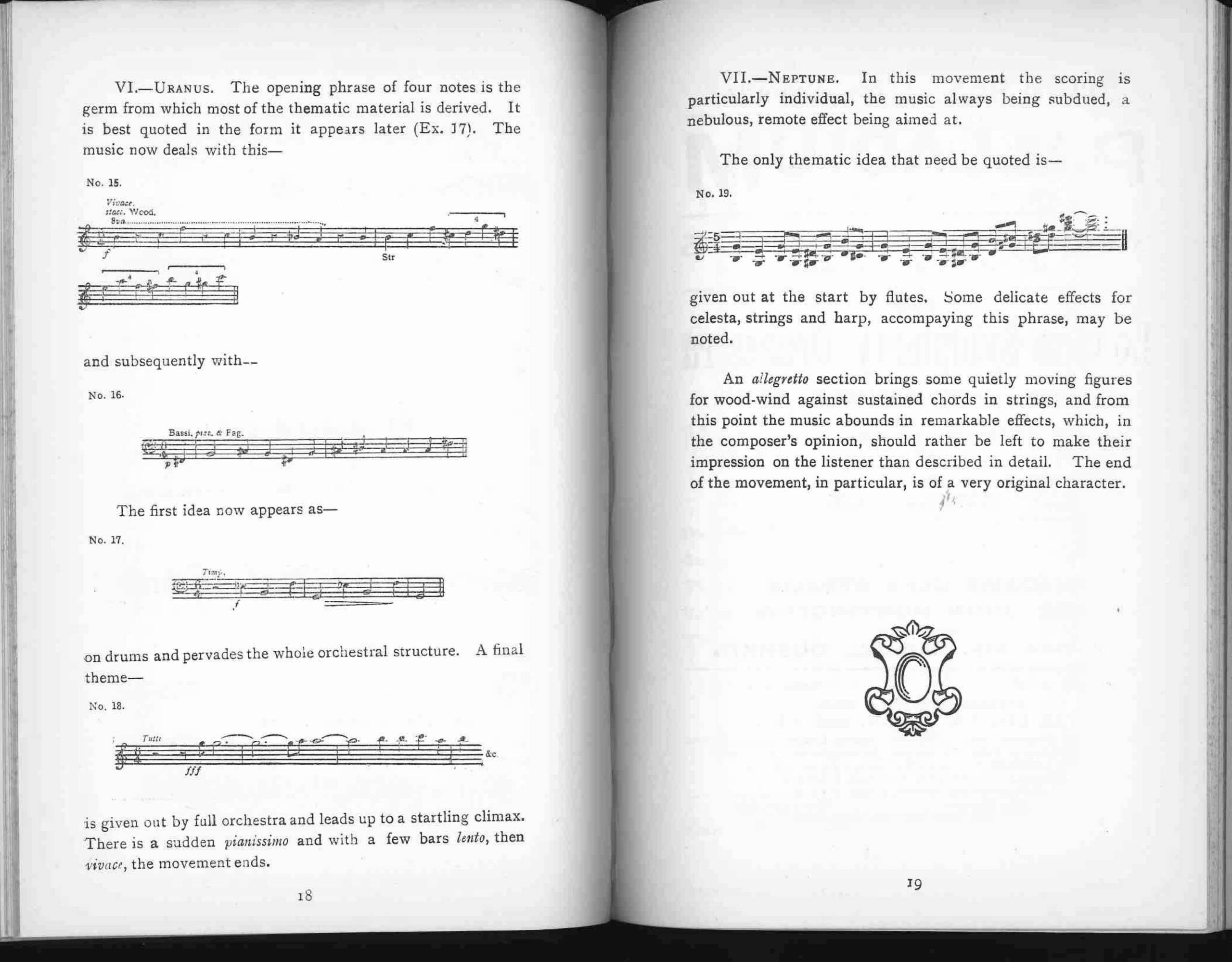
The LSO has an important connection to Holst’s music, and to The Planets in particular. We gave the first complete public performance of the work in 15 November 1920, with Albert Coates conducting (the programme shown here contains the original notes by the conductor). We also performed on Holst’s own first recording, made between 1922–24. Holst recorded the work again with the LSO in 1926, making use of the new electrical recording process.
The Orchestra has had a close link with the work ever since, releasing several landmark recordings over the decades. Our two most recent recordings for LSO Live are the 2002 recording with Sir Colin Davis and the 2026 release with Sir Antonio Pappano, who also performed excerpts from the work as part of the 2026 BMW Classics concert in Trafalgar Square.
Our latest work related to The Planets is an educational resource for KS2 students, which includes lesson plans, resources, a quiz and video content featuring British astronaut Tim Peake.
Composer Connections
Of Holst’s musical contemporaries, Vaughan Williams was without doubt the most important. They shared musical interests (including the English folk song revival and European works by Stravinsky and Ravel) and a broadly similar political stance (socialist, humanitarian). He was friendly with Rutland Boughton, Balfour Gardiner, and Arnold Bax, whose brother Clifford shared Holst’s interest in astrology. His daughter Imogen became a composer, though he died before seeing much of her later success. Holst did not belong to a particular large or gregarious group of friends, being somewhat introverted by nature, but was devoted to those in his inner circle. In a tribute to him after his death in 1934, Vaughan Williams warmly remarked:
‘Holst was a great composer, a great teacher, and a great friend. These are really only different aspects of the same thing – his pupils were his friends, his friends were always learning from him, his music made friends for him all over the world even among those who had never seen him, and will continue to make more friends for him in the years to come.’
Listen to Holst live
Upcoming concerts featuring music by Holst.

Symphonic Cinema: The Planets
Matteo dal Maso and Lucas van Woerkum
Sunday 31 January 2027 • 6pm
Holst’s The Planets meets live‑shaped film in Symphonic Cinema, featuring the UK premiere of LOSS with Emma Thompson and Greg Wise.

Symphonic Cinema: The Planets
Matteo dal Maso and Lucas van Woerkum
Sunday 31 January 2027 • 7.45pm
Holst’s The Planets meets live‑shaped film in Symphonic Cinema, featuring the UK premiere of LOSS with Emma Thompson and Greg Wise.
Written by Lucy Walker
